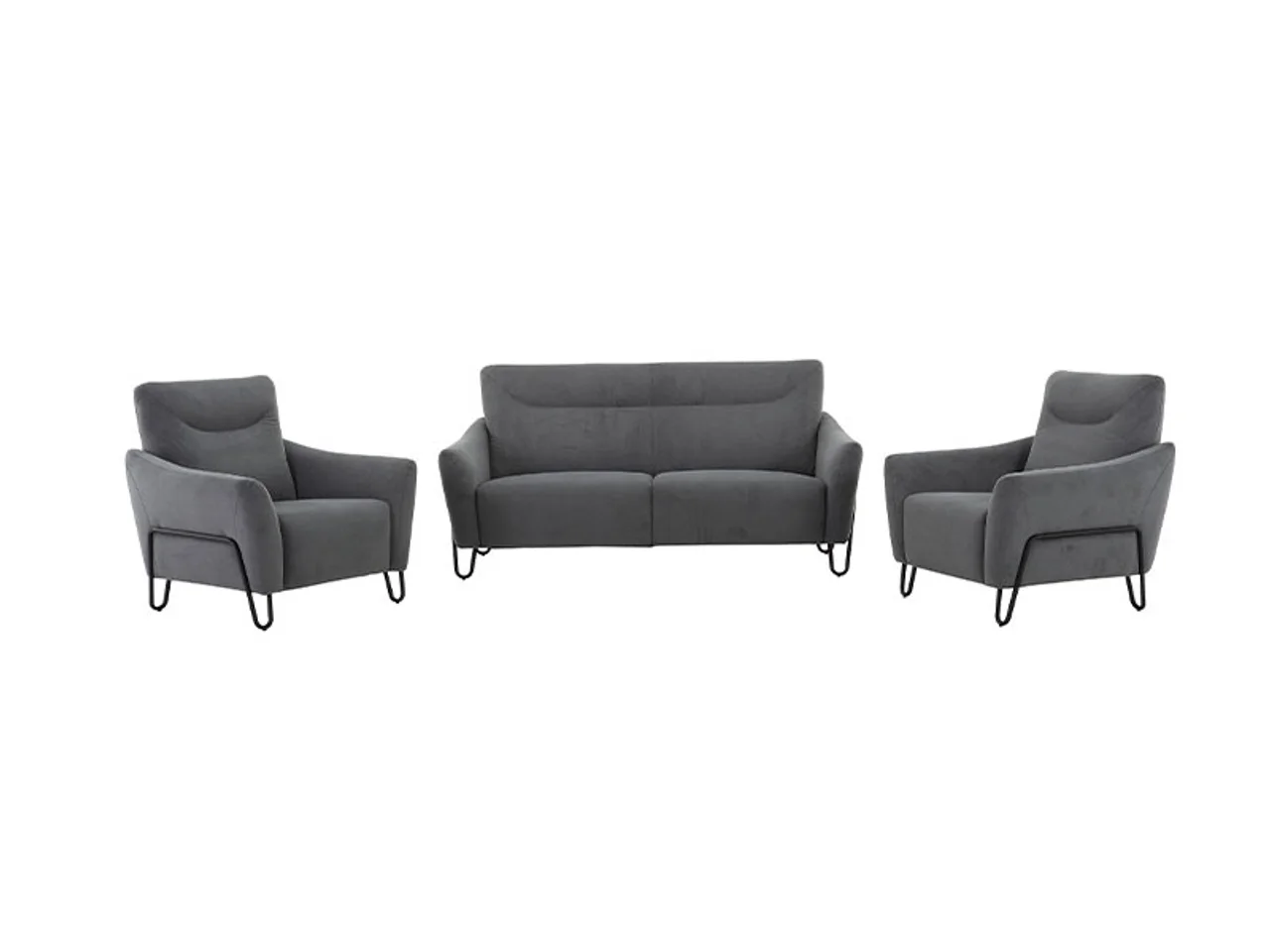
When a buyer tells me they want a "soft but supportive" sofa, I ask for a number, because soft is not a spec and it is not something I can hold a supplier to. Seat comfort that survives daily use comes down mostly to foam density, and it is worth understanding before you compare two quotes that look identical on paper.
What density actually measures
Density is the weight of foam per unit of volume — kg/m³ in metric, pounds per cubic foot (lb/ft³, or "pcf") in the US trade. It is not the same as firmness. A dense foam can be soft, and a light foam can feel firm at first; density predicts how long the cushion keeps its feel, not how hard it is on day one. For seat cushions, most upholstery foam sits between 1.5 and 2.5 lb/ft³, with 1.8 and 2.0 the common workhorses. High-resilience (HR) foam, which the US trade rates around 2.5 to 3.0 lb/ft³ for cushions, recovers its shape faster and resists the "bottoming out" you feel in a cheap couch after a year. In metric, contract and hotel work often calls for 35 to 50 kg/m³ HR in the seat.
Where density goes on a sofa or recliner
You do not use one foam everywhere. The seat takes the load, so it gets the higher-density HR foam. The back is mostly about feel, so a softer, lower-density foam (often with a fibre or feather wrap) is fine and keeps cost and weight down. On a recliner the seat and the footrest see the most cycling, so that is where we hold the density. Spec it the other way around — soft foam in the seat, dense in the back — and the chair feels wrong and wears out fast.
The trade-off we argue about
Dropping the seat foam from 35 kg/m³ HR to a bargain-grade 22-25 kg/m³ conventional foam can shave a real slice off the unit cost, and on a quote it is invisible. It is also the single biggest reason a cushion goes flat and a customer leaves a one-star review about a "sagging" sofa six months in. For a daily-use home or contract sofa we steer you above bargain foam every time, and we will tell you the density we are quoting rather than hide behind "premium". For a low-traffic showroom piece or a tight budget line, lighter foam is a legitimate choice — but it should be a choice you made, not one that was made for you to win a price.
How we build it
We cut and pour foam in-house rather than buy finished cushions, which is what lets us hold a stated density across our sofas and recliners and even into the comfort layer on our massage chairs. Specs and ILD/IFD targets are something we put in writing on the order. If you want a cushion build mapped to your market and price, our ODM/OEM team will quote it by density, not adjective.
Send your model and target price through our contact form or to [email protected], and tell us whether the line is home or contract — it changes the foam.