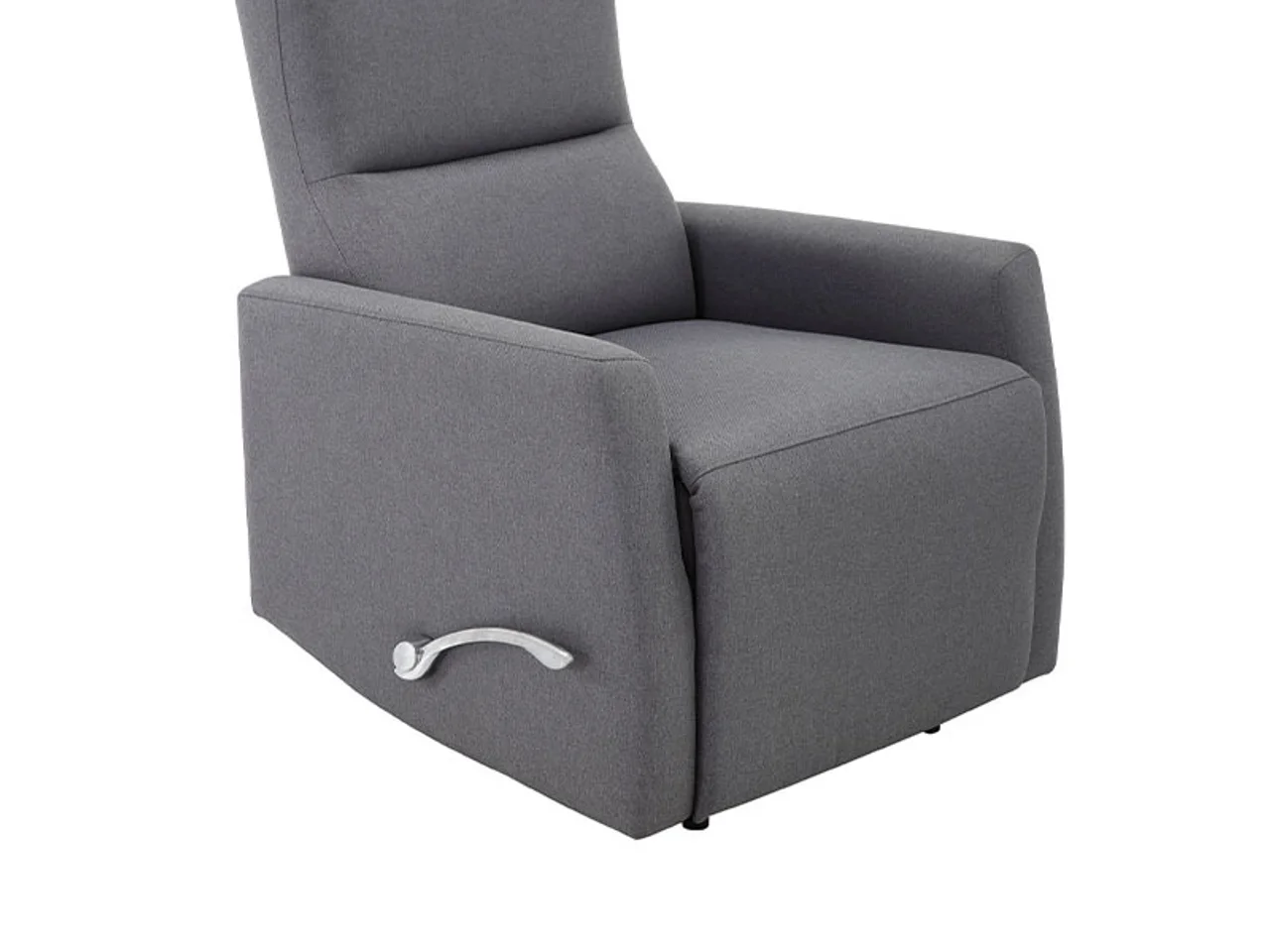
Every few months a hotel group or a spa operator asks us for "the same chair you sell to retailers, but for our lounge." We quote them a different chair, and the rest of this note is the explanation. The product looks identical in a photo. The duty it lives under is not, and the spec has to follow the duty, not the photo.
Duty cycle: the number that changes everything
A home massage chair runs one or two sessions a day, with hours of rest between. A chair in a spa waiting area, a hotel wellness corner or an airport lounge can run fifteen or twenty sessions back to back at peak, every day, for years. That multiplies the cycle count on every moving part — roller carriage, airbag pump, recline actuator — by a factor of ten or more. A motor that would live seven comfortable years in a living room reaches the same cycle count in under a year on a busy floor. Nothing "breaks early" in that story; the part simply met its rated life on a different calendar.
So the first spec change is internal: motors and actuators rated for continuous duty and higher cycle counts, thermal protection that tolerates back-to-back sessions instead of assuming cool-down gaps, and seat foam at the dense end of the range because the seat is cycling all day. We hold the same logic on our recliner lines — a mechanism that cycles constantly gets the heavier spec, full stop.
Upholstery: fabric is wrong here
The second change is the cover. Fabric is pleasant in a home and unmanageable on a commercial floor, where the chair meets a new user every twenty minutes and a cleaner with a spray bottle every night. Commercial units want a wipeable PU or vinyl rated for repeated cleaning agents, with sealed seams where heads and hands rest, and ideally a replaceable headrest cover — the headrest carries the most contact and ages first. Plan covers as a consumable: a spare set of headrest and armrest covers per chair turns a tired unit into a fresh one without touching the mechanism. The deeper cover logic is the same one we walk through on contract sofa programmes: choose by cleaning regime, not by showroom feel.
Controls: fewer buttons, longer life
Home chairs sell on feature count; commercial chairs survive on the opposite. A guest who has never seen the chair before gets one or two preset programs and a clearly bounded session — typically 10 to 15 minutes with an automatic stop, both because that is how operators meter the floor and because the timer is what enforces the rest intervals the mechanism needs. The elaborate remote is the first casualty of public use, so commercial specs move toward a simple wired panel or a sealed touch pad, with the deep settings locked away from guests. If the operator wants session control or payment integration, that is electrical work to scope at order time, not a module to tape on later.
Safety paperwork and the warranty line
Two administrative points that bite late. First, a chair in a public space sits under stricter scrutiny than a living room — the electrical safety stack we covered in the UL 1647 / EN 60335 note still applies, and commercial operators and their insurers actually ask for the report. Budget the testing per order rather than assuming a home-market file transfers. Second, read the warranty: home-rated massage chairs almost universally exclude commercial use, so putting a residential unit in a spa quietly voids it on day one. A commercial programme needs the duty stated on the order and a warranty written against it — and a service-parts plan sized for commercial cycle counts, because even the right spec consumes parts faster on a public floor.
Placement: the cheap decisions that protect the expensive ones
A few floor-level details decide how long the spec above survives. Give each chair its own grounded outlet rather than a daisy-chained power strip — surge events are a leading killer of control boards, and a public corridor sees more electrical noise than a living room. Leave clearance behind the chair for the full recline arc plus a hand's width, or guests will recline it into the wall until something gives. Keep units off direct sunlight and away from pool-chemical air, both of which age PU covers years ahead of schedule. And put the chairs where staff can see them: a unit in a blind corner collects misuse, while one in view of the front desk mostly collects sessions. None of this costs money at fit-out; all of it is expensive to discover later.
The honest cost picture
A commercial-duty unit costs more than the home version of the same chair — heavier motors, contract upholstery, testing — and the operator math still works, because the alternative is replacing home-spec units every twelve to eighteen months and absorbing the downtime in front of guests. Where we will talk an operator down is quantity: most hotel wellness corners run two to four chairs hard rather than eight chairs lightly, and the budget moves better into duty rating than into floor count.
If you are fitting out a hotel, spa or lounge, tell us the expected sessions per day and the cleaning regime, and we will spec the chair against the real duty — honestly, including where a standard unit is enough. Reach us through the contact page or [email protected]; our OEM/ODM workflow covers contract programmes as well as retail.